
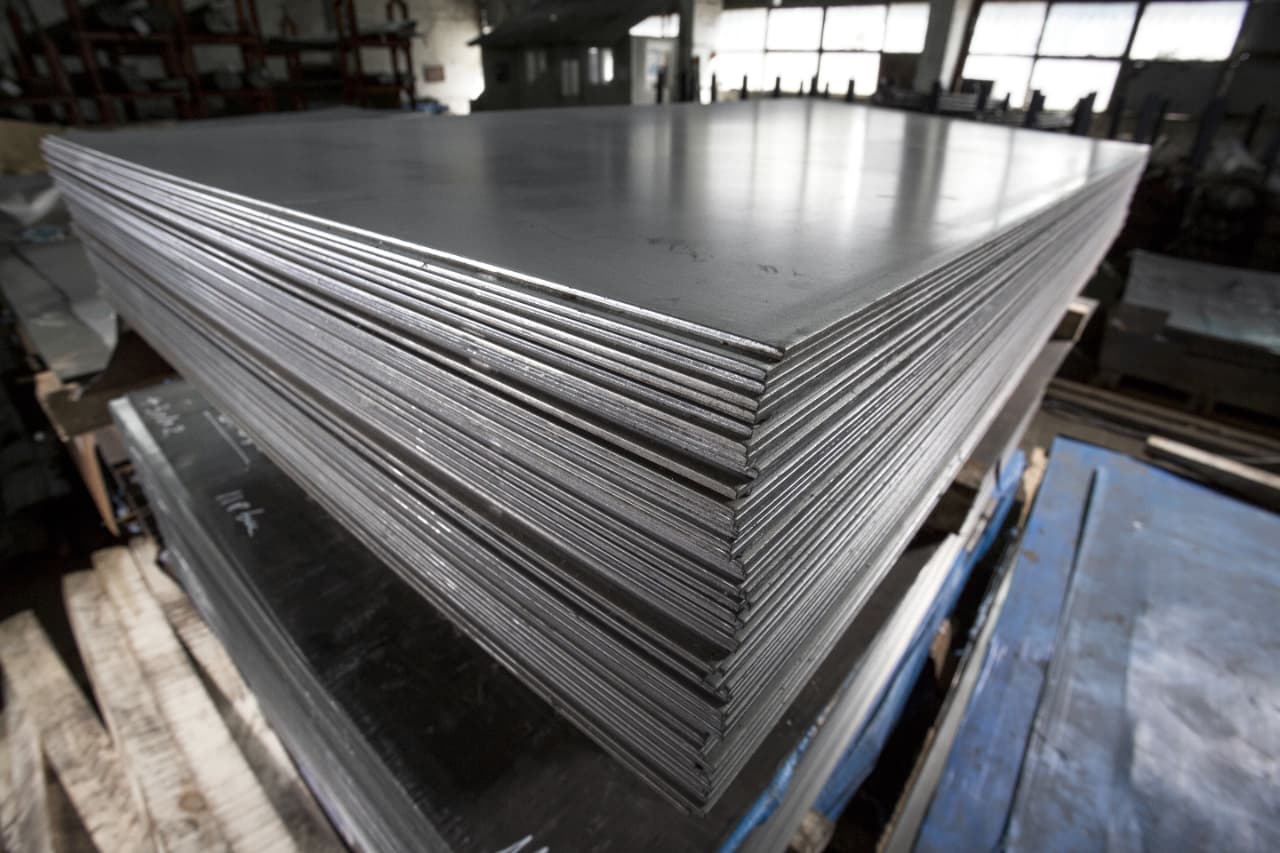
MS plates (Mild Steel) and SS plates (Stainless Steel) are flat structural steel components used in construction, fabrication, and manufacturing, differing mainly in composition, corrosion resistance, and cost.
MS Plates are chosen a for cost-effective strength in protected environments and SS for durability where rust or hygiene matters.
MS Plates Overview
Mild steel plates contain low carbon (0.05-0.25%), making them affordable, ductile, and easy to weld, cut, or form. Common grades include IS 2062 GR A/B, ASTM A36, and SS400, with thicknesses from 3mm to 250mm and weights calculated via density (≈7850 kg/m³).
Key properties:
SS Plates Overview
Stainless steel plates alloy iron with chromium (≥10.5%) and often nickel, forming a passive oxide layer for superior corrosion resistance. Popular grades: 304 (18% Cr, 8% Ni) and 316 (with molybdenum for harsher environments).
Key properties:
Key Differences | ||
Aspect | MS Plates | SS Plates |
Composition | Low C (0.05-0.25%), no Cr | Cr ≥10.5%, Ni, Mo in some grades |
Corrosion | Rusts easily; needs painting | Highly resistant via passivation |
Strength | 370-500 MPa, ductile | 500+ MPa, retains at high temps |
Cost | Lower, ideal for general use | Higher, for corrosive/hygenic apps |
| ||
Uses | Beams, frames, ships, machinery | Food processing, marine, chemical |